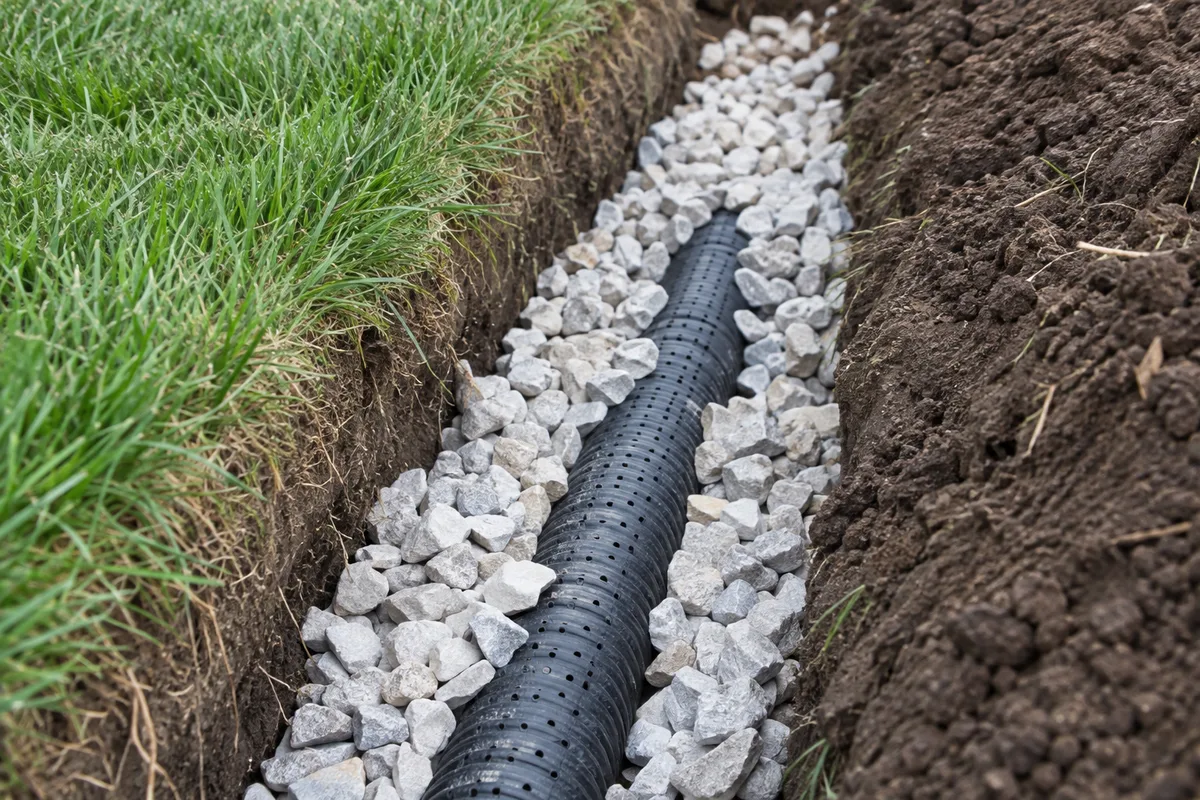
Subsurface
Intercept movement through soil
Compare depth, filter materials, slope, access, and a maintainable discharge point.
Residential drainage decision guide
Give the water somewhere sensible to go.
Carmel Signature Drainage compares French drains, surface collection and roof-runoff routes around the outlet a property can actually use. This guide helps frame a site-specific assessment, without promising contractor availability.
Voicemail-only enquiries. No staffed office, booked appointment or contractor availability is represented.
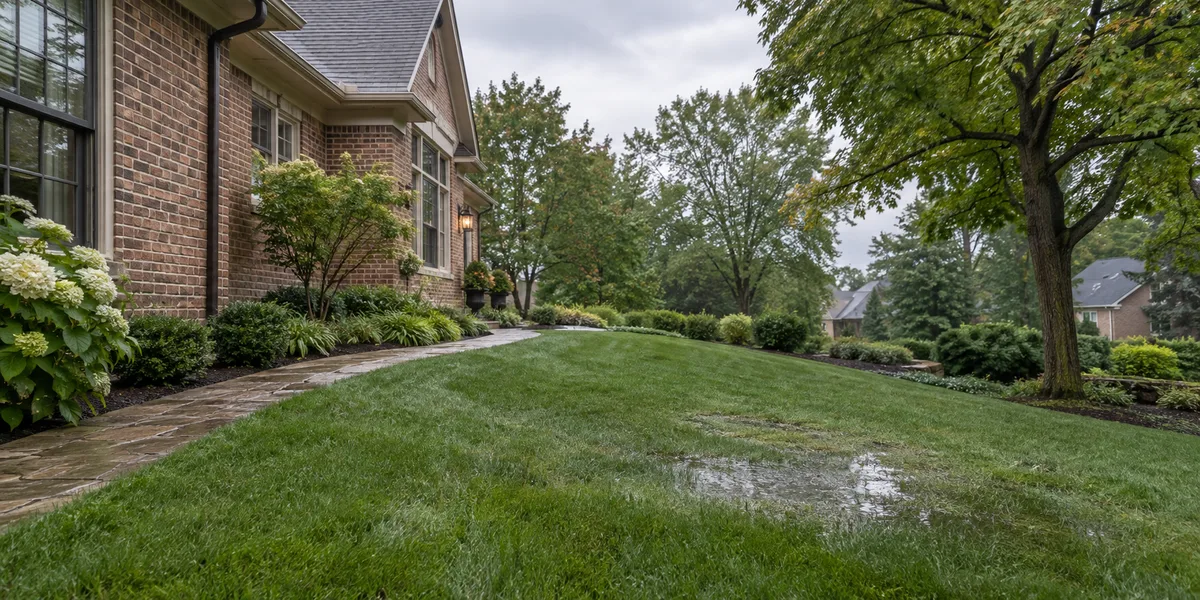
Collection
Surface water and shallow subsurface water call for different collection points. A useful plan identifies whether the symptom is broad saturation, a defined low spot, or repeated flow along an edge.
A French drain installation can collect water moving through saturated soil, while catch basins are intended for visible surface collection at a low point. Neither choice answers the outlet question by itself.
Compare depth, filter materials, slope, access, and a maintainable discharge point.
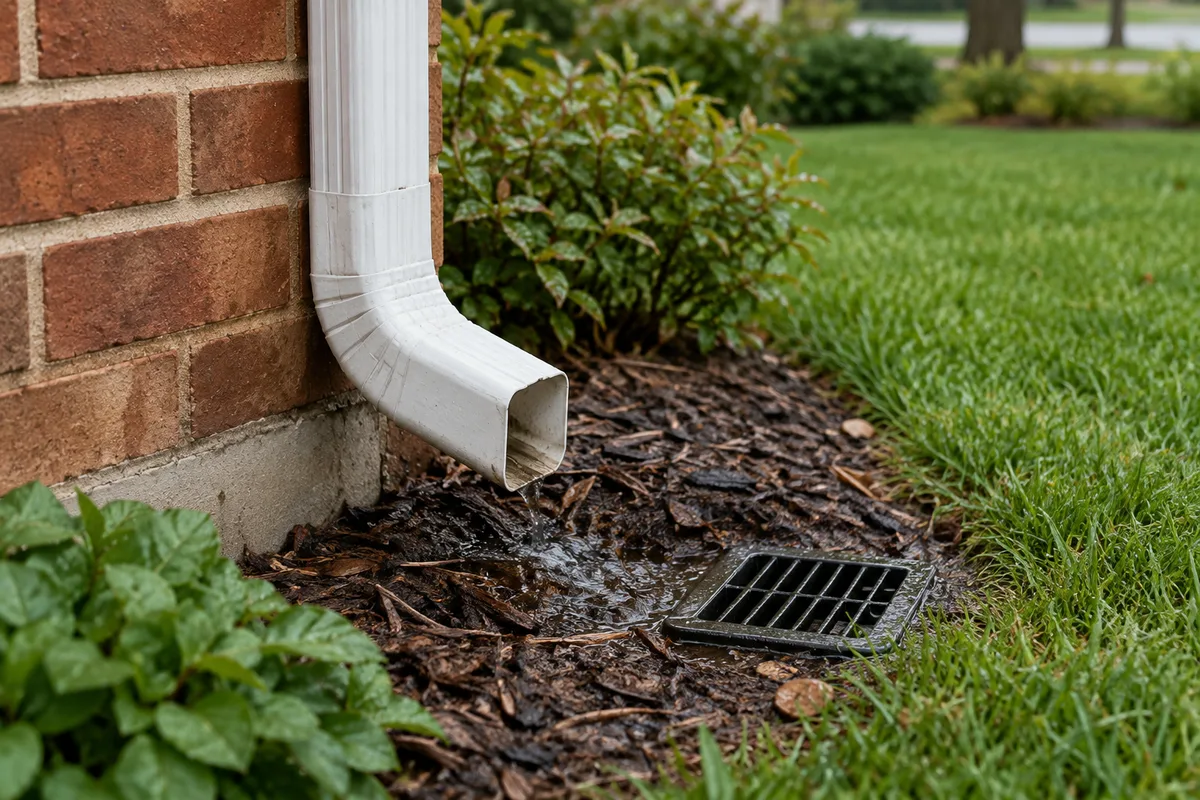
Place inlets where water predictably arrives, then keep grates and basins accessible for cleaning.
Conveyance
Roof water is already concentrated. The practical question is whether it can be carried away from the foundation and released without creating erosion or pushing water toward another property.
Buried downspouts can conceal solid conveyance pipe, but cleanouts, connections, frost conditions, and outlet access still matter. Where surface pitch is part of the problem, yard grading may complement collection rather than replace it.
Estimate inputs, not advertised prices
Broad saturation, roof runoff, and a single low spot do not point to the same assembly.
Distance, elevation, access, and permission can matter as much as the collection point.
Depth, roots, hardscape crossings, and equipment access affect labor and restoration.
Solid pipe, perforated pipe, stone, filter fabric, basins, and fittings serve different jobs.
Lawn, planting beds, edging, and disturbed hardscape change what it takes to leave the route usable.
Scheduling reality
A short, accessible run and a multi-zone plan with crossings are not comparable. Weather, locating, review requirements, excavation, testing, and restoration can all affect sequencing.
Any schedule should come after the proposed route and outlet are understood. This guide does not quote completion times or response windows.
Interactive planning prompt
Choose the closest known condition. This does not approve a route or replace site, utility, easement, or municipal review.
A measured sequence
Record where water begins, where it travels, and how long the symptom remains after rain.
Review elevations, roof discharge, low points, structures, utilities, easements, and outlet possibilities.
Choose collection and conveyance components based on the actual water path, not a single product label.
Check Indiana 811 member responses, contact non-member utilities separately, and arrange locating for owner-maintained private lines before excavation.
Keep inlets, cleanouts, outlets, and visible erosion points accessible for later inspection.
Carmel planning review
Carmel’s published drainage FAQ directs questions about connecting to a storm sewer toward the city’s drainage plan and inspection process. It also notes that regulated drains are administered by the Hamilton County Surveyor, while encroachment within an easement may require review.
Those references describe questions to resolve. They do not mean every property has the same approval path, that a connection is available, or that a proposed outlet is acceptable.
Neighboring communities
These six guides explain local records, water paths and review questions. Publishing a guide does not define an operating boundary, establish a local office or promise service availability.
Form behavior is explicit
Use the form to request a drainage quote. A request does not confirm a quote, an appointment or contractor availability. The displayed 317-978-8710 is a separate voicemail-only enquiry line. It does not represent a staffed office or an emergency service.
Buyer questions
A useful price needs the collection area, route length, trench access, outlet work and restoration scope. This guide does not publish a surveyed Carmel installed-price range or quote a job from photos alone.
It is not a substitute for solid roof-water conveyance, a suitable outlet, or a grading correction when surface slope is the cause. Sediment and inaccessible service points also create maintenance concerns.
There is no single depth for every yard. The water to intercept, outlet elevation, product layout and underground facilities affect the trench. A foundation-water problem needs a separate assessment; do not dig to a generic online dimension.
The collected water needs a suitable receiving destination. Confirm elevation, capacity, maintenance access and permission before choosing the route. A larger pipe does not create an outlet or approve a City storm connection.
Before moving soil, identify the existing contours, receiving area, utilities, easements and restoration needs. Changing a surface route can move water toward a building or neighboring lot, so do not treat a drainage regrade as simply filling a puddle.
Not automatically. Solid buried pipe can carry roof runoff without a surface extension, but it adds buried connections, cleanout needs and outlet access. Compare both layouts against grade, overflow, maintenance and the permitted receiving area.
A catch basin collects visible surface water at a low point and passes it into downstream piping. It is not a perforated French-drain collector for saturated soil, and it still needs a suitable outlet and cleaning access.
Match the assessment to the water source and affected area. Exterior drainage and grading differ from foundation seepage, pump faults and interior plumbing. This guide helps describe the problem; it does not represent an available contractor.
Indiana 811 says to contact it at least two full working days before excavation and check Positive Response. Contact non-member utilities separately and arrange locating for owner-maintained private lines.