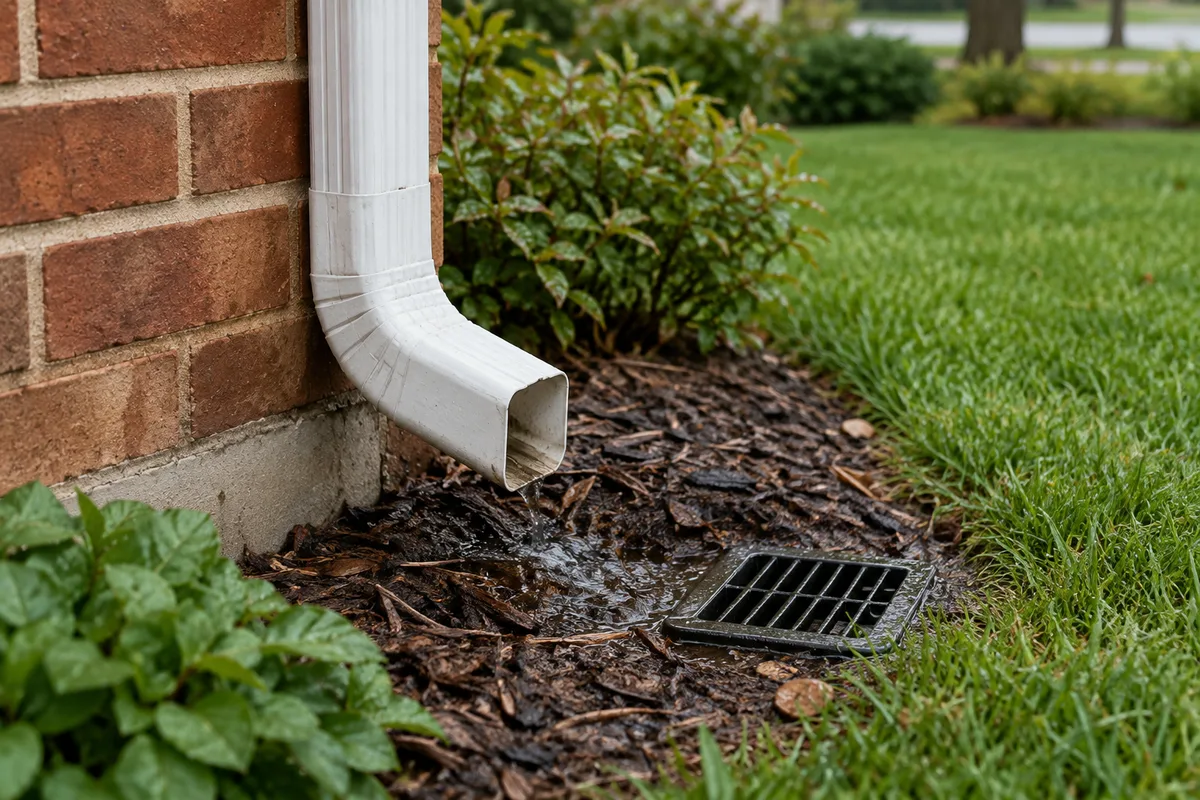
Carmel Signature Drainage groups catch basins, area drains, and channel drains by the surface runoff they collect. A catch basin handles concentrated flow at a point. A channel or trench drain intercepts water along a hardscape edge. Both still depend on outlet elevation, downstream pipe capacity, and maintenance access.
Choose a catch basin for a low point or a channel drain across hardscape
Catch the true lawn low point
A catch basin works when surface water naturally converges on its grate. The rim elevation must accept flow without sitting so low that soil and mulch continually wash in. An atrium grate can remain open above light debris, while a flat grate fits traffic and finished surfaces when its load rating and location are appropriate.
Intercept runoff across a patio or driveway
A channel drain spans the direction of sheet flow. It can protect a garage threshold, walkway, patio edge, or other hardscape transition, but it must be set to receive the surface grade rather than sit above it.
Size the basin, grate, and outlet as one assembly
Do not let the outlet pipe become the bottleneck
NDS notes that the connected pipe can limit how much water leaves a catch basin. Inlet area, pipe diameter, bends, route length, slope, and downstream release all matter. A large grate over a small or obstructed outlet does not create a high-capacity system.
Use the sump and connections deliberately
The sump beneath an outlet can hold sediment before it reaches the pipe. Universal outlets, risers, seals, and pipe transitions must match the chosen basin. The NDS catch-basin guidance also distinguishes soil-tight component connections from a fully watertight assembly.
Plan for cleaning before the grate is surrounded
Keep the grate, sump, and downstream inspection point accessible
Leaves, mulch, silt, and roof grit can cover a grate or settle in the sump. A removable grate, reachable sump, inspection point, and accessible downstream outlet make inspection and maintenance less disruptive. A complete yard-drainage assessment can then distinguish a serviceable blockage from an inlet, capacity, or outlet-layout problem. Landscaping should not bury the inlet or block a pop-up emitter after installation.
Avoid surface-drain installation failures
Test collection elevation and downstream conveyance together
A basin above the low point leaves the puddle untouched. A channel that ends before the full flow path lets water pass around its edge. Other failures include an undersized pipe, reverse fall, loose transition, crushed section, clogged outlet, and a discharge point that sends water into another problem area.
Compare catch-basin and channel-drain quotes
Separate materials, trenching, outlet work and finish repair
- Materials: basin or channel, grate load rating, pipe and fittings. Confirm whether you or the installer supplies them.
- Groundwork and outlet: excavation, utility crossings, concrete cutting, spoil handling and the proposed downstream connection.
- Finish repair: backfill and any turf, paving or concrete restoration included in the price.
A labor-only trenching quote and a complete collection-to-outlet installation are not the same scope.
Verify the route before connecting downstream
Confirm easements, utility crossings, and storm authorization
A basin is only the collection point. If the route crosses an easement, regulated drain, or right-of-way, Carmel Engineering identifies additional review paths. A private connection to a City storm structure requires owner plan review, a bonded contractor, and an inspector present at connection time.
Trenching also requires an Indiana 811 ticket, the required waiting period, and Positive Response review. Private utilities beyond member markings need separate attention.