Carmel Signature Drainage explains when Noblesville city review and Hamilton County regulated-drain authority need separate questions. This informational guide does not establish service for every parcel or replace city and county review.
Noblesville Housing and Property Context
Use housing form to choose the records to check
The City’s summary of its 2016 Residential Market Analysis distinguishes large-lot detached homes from apartments in large multifamily developments. That study also noted limited attached housing types, including townhouses and two-unit structures. This is a historical planning baseline, not today’s housing mix or a diagnosis of an individual lot. For a detached yard or shared residential grounds, bring the recorded plat, drainage plans and maintenance agreements to the review. The actual receiving path and responsibility for shared drainage still need property-specific confirmation.
Keep downstream capacity in the discussion
Noblesville’s current development code says new development must make adequate provision for runoff and evaluate the immediate downstream receiving system. It also says drainage facilities should be in the road right-of-way where feasible or in perpetual unobstructed easements. Those development standards should not be presented as a promise about a minor retrofit. They do explain why the endpoint and downstream condition belong in a residential drainage assessment.
Noblesville Review and Jurisdiction Questions
Distinguish city review from regulated-drain authority
The Noblesville Building Division reviews residential additions, accessory structures, pools and related projects within its authority. Hamilton County’s current plan-review map assigns Noblesville Township and the City of Noblesville to Plan Review Area 1 for County Surveyor matters. For a Noblesville parcel in that Area 1 path, the County says a permit is required for crossing, outletting to or working within the easement of a regulated drain. A Noblesville project may therefore need a city conversation, an Area 1 County Surveyor conversation or both, depending on the parcel and outlet.
Treat easements and swales as functional space
Within that Noblesville Area 1 workflow, Hamilton County distinguishes a regulated-drain easement protecting a Drainage Board facility from other land reserved for drainage. The County FAQ says a Noblesville regulated-drain encroachment needs Drainage Board approval. For a non-regulated Noblesville swale, the same FAQ warns that filling can block drainage and sends the question back to the local planning jurisdiction. A fence, shed, landscape bed or pipe should not be planned in that space until its status is known.
Noblesville Water-Path Decisions
Protect the established surface route
If a Noblesville rear-lot swale is the designed route to an inlet, yard grading should maintain continuous fall rather than erase the channel. A catch basin may help at a defined collection point only when the downstream conveyance is verified. A buried solid pipe can move roof water, but a buried downspout still needs an acceptable endpoint. The property should not gain relief by sending concentrated flow into an easement or adjoining lot without approval.
Use subsurface drainage for the right symptom
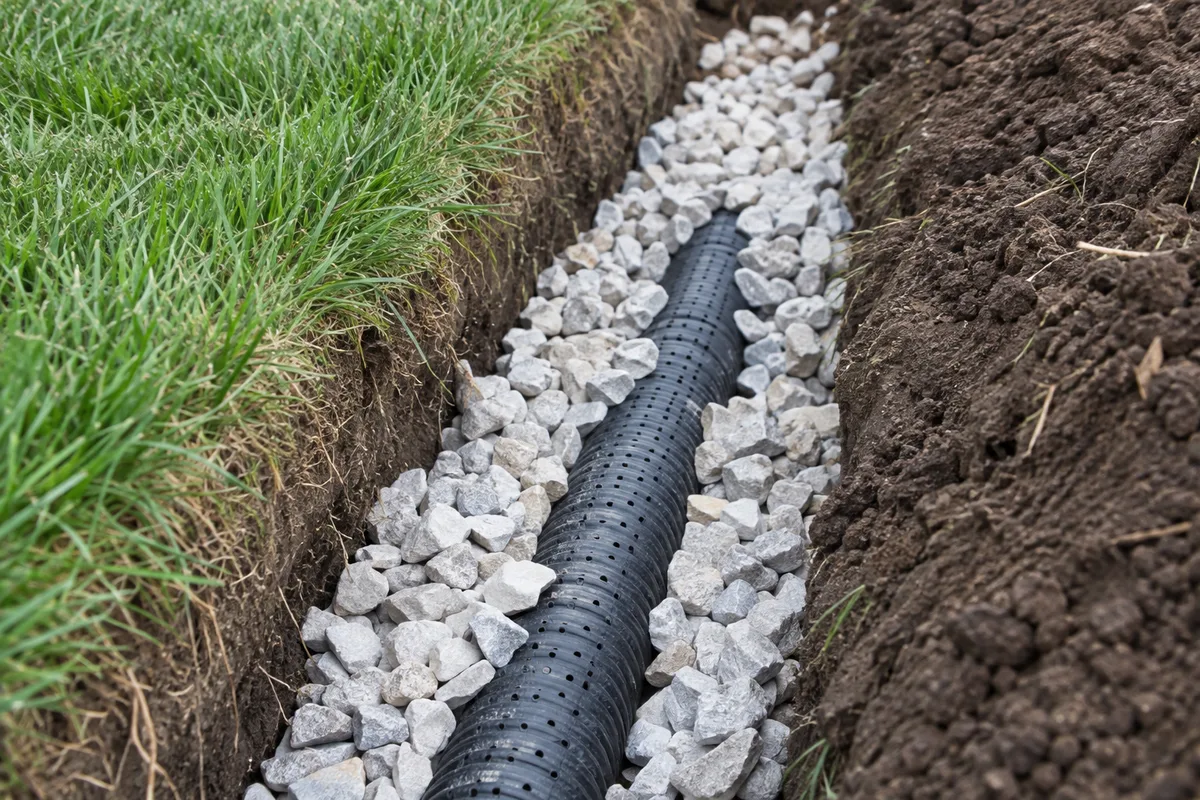
A French drain may be evaluated where shallow subsurface water feeds a persistent wet band. It is not a substitute for a blocked swale, failed inlet or collapsed outlet pipe. For a Noblesville Area 1 inquiry, an existing subdivision drain, field tile, open ditch or creek can be the regulated feature that triggers County review. That makes identification of the receiving feature part of diagnosis, not an administrative afterthought.
Drainage Services Suited to a Noblesville Assessment
Diagnose before selecting the assembly
Surface ponding, roof discharge, subsurface seepage and a failed existing system call for different assemblies. A yard drainage plan should consider targeted repair when a known pipe, inlet or outlet has separated, clogged or collapsed, and it needs to route any sump discharge without nuisance flow and with the same easement and outlet questions resolved. Field elevations and rain-event evidence should decide whether grading, collection, conveyance or repair is primary.
Prepare the jurisdiction questions
Bring the Noblesville address, parcel or subdivision information, plat if available and photos showing the complete water path. Ask whether the receiving feature is a County regulated drain, whether the route enters a regulated easement and which office reviews the proposed scope. Keep written responses, approved plans and final locations with the property records. Preview the contact page for the details to prepare before an assessment, without predetermining the reviewing authority.